



Who are The Free States of Prussia Stosstruppen?
“The Prussian Army always attacks.”
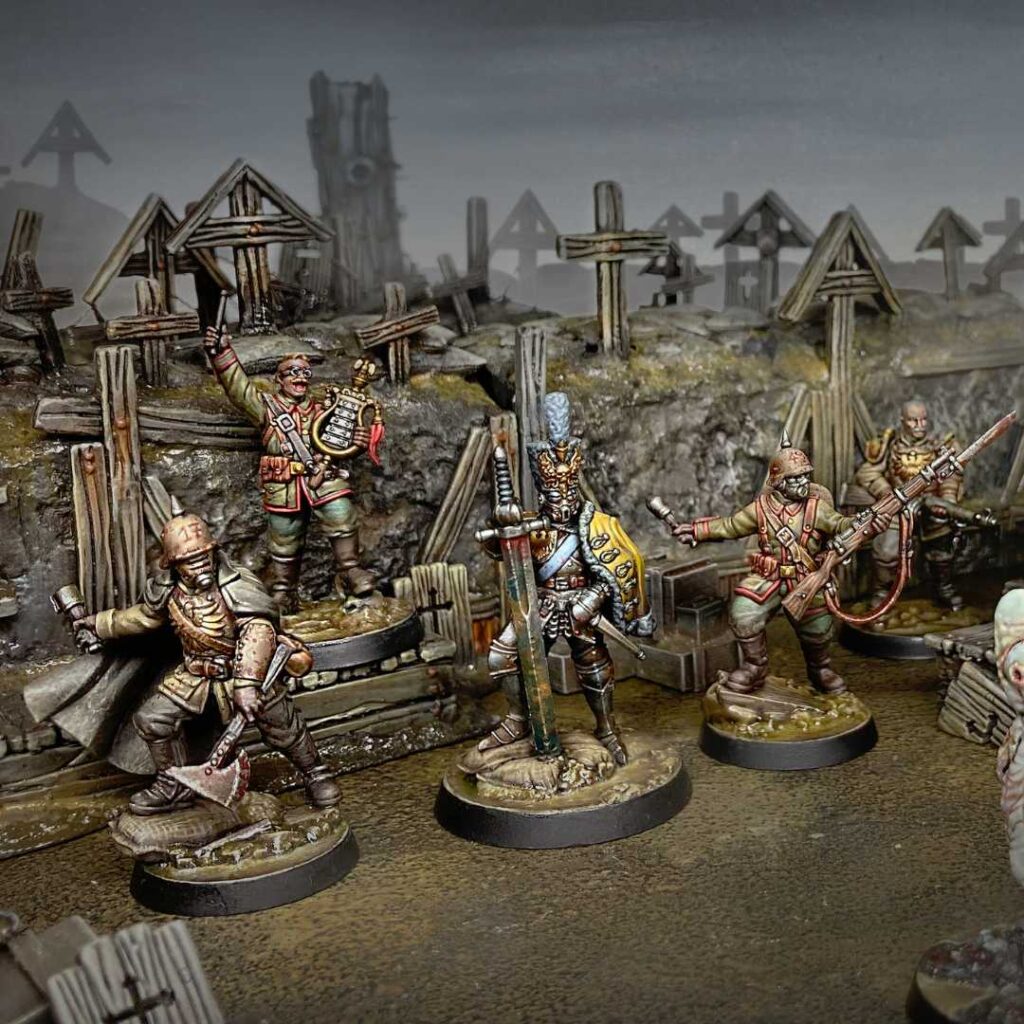
So echoes the oath within the hallowed walls of Königsberg Cathedral, a promise uncompromising made by all given the deathwish honour of joining the Stosstruppen of the Free State of Prussia. To swear this oath is to commit to a life of gritted teeth and clenched fists, of endlessly honed athleticism, and of sprinting into the maws of death with naught but a grenade in hand and an ally at your back.
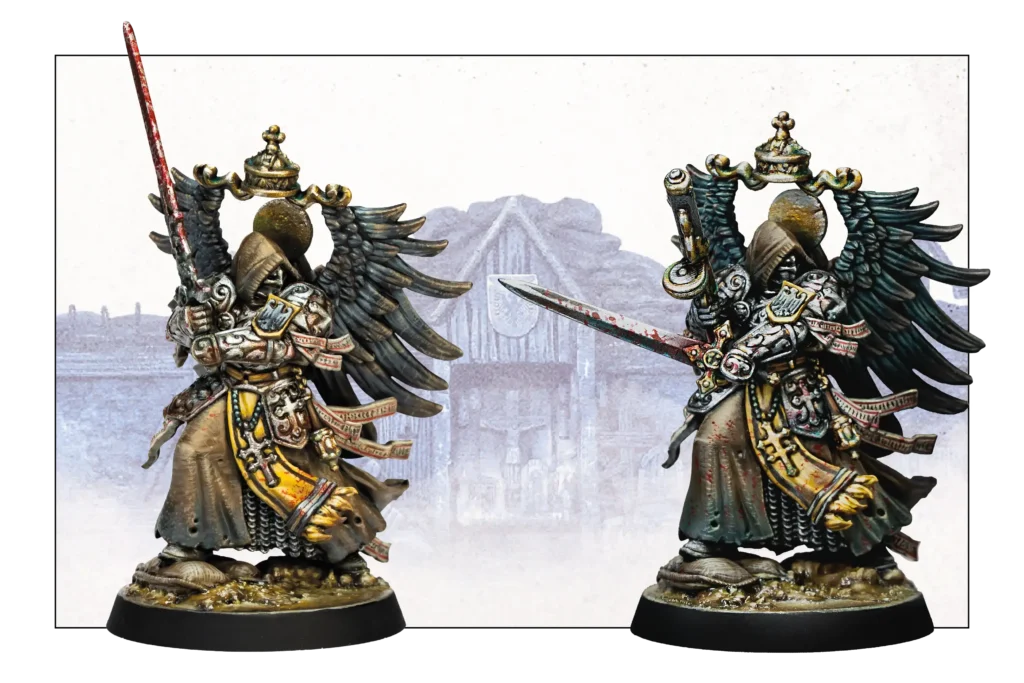
Such willingness to face impossible odds is what makes the Stosstruppen the stuff of legend amongst the myriad regiments of the Principality of New Antioch, but it is their training that brings these legends to life. At their heads march the Hauptmann, leaders of renowned and tactical acumen, oft seen to wield the huge, impossibly lethal tank-splitter swords like a fencer would a foil. Such a position is an honour and a burden, for the social pressures of Prussian society would rather see a Hauptmann die than retreat.
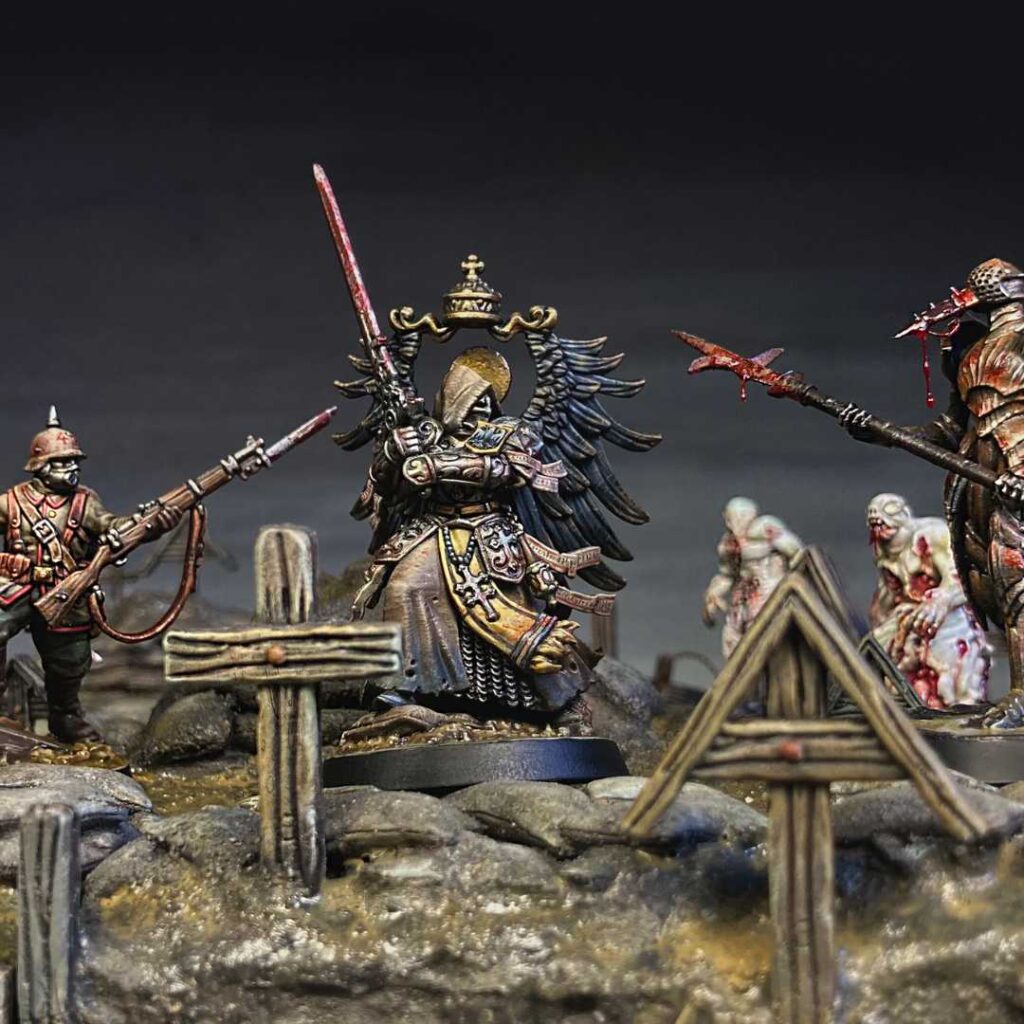
By their sides walk the Feldkaplan, pious chaplains adorned in the finest armour in the image of knightly angels, armed with burning blades, holy prayer and grenades filled with frankincense and myrrh.
The core of these elite warbands are formed by their namesake – the Stosstruppen. Chosen for their aggression and their athleticism, the Stosstruppen are drilled ferociously in lightning, grenade based assaults and shocking close quarter warfare. Despite their cultivated belligerence, the coordination of the Stosstruppen is par excellence, moving in multiple tight fireteams to deliver a rapid onslaught of blows able to break through the toughest enemy fortifications.
Behind the Stosstruppen march the Yeomen, less specialised but no less valuable soldiers that secure objectives and pick off escaping enemies as the vanguard push ahead. Whilst Prussian warbands prefer to march fast and light, they are not unknown to field explosive expert Combat Engineers to aid in clearing the way for the charge, Combat Medics to rescue the fallen, as well as rare fire support from Mechanized Heavy Infantry and the sacred ammunition sent across No Man’s Land by the holy orders of Sniper Priests.
How they Play
The Prussian Stosstruppen are a Warband Variant of New Antioch that specialise in close range assaults with Shock Troopers. Granted a higher number of these elite troops, Prussian Shock Troopers thrive on repeated attack actions, favouring paired melee weapons or submachine guns. When paired with the Variant’s inherent mobility and additional Fireteam, the Stosstruppen can be an early and relentless threat, pulling off a series of chain activations that can whittle down even the toughest enemies with a flurry of grenades, clubs and bullets.
These shock tactics make up for the loss of the heavier arms and armour present in the core New Antioch Warband lists. With a playstyle commonly referred to as ‘glass cannon’, your models can deal a lot of damage, but can themselves be fragile if left out in the open, so using cover wisely as your models race up the trenches in small groups will be crucial. In order to maximise your models efforts when they do make contact, use your own firepower to load up the larger or more lethal enemy threats with Blood Markers as soon as possible.
Strengths
- Fireteam Specialists: Prussian soldiers drill intensely so as to better coordinate their attacks. You can have up to 3 fireteams in a Prussian Warband which increases their ability to present threats simultaneously across the battlefield, or chain their activations to bring down more resilient foes through the Bloodbath rule.
- Rapid Assault: The Stosstruppen style of warfare emphasizes closing in and outmaneuvering your enemies. The Rapid Assault ability can be purchased by Stosstruppen and the Hauptmann, making Dash actions far more reliable. A very useful skill that allows you to close in on (or outflank!) priority threats quickly, and mitigate the effects of any Blood Markers your opponents spend to make your Actions more likely to fail.
- Masters of the Grenade: Nowhere better is the peak athleticism of the Stosstruppen exemplified than by the power of their throwing arms. Prussian warbands gain a bonus to the range of their grenades, making them their close ranged weapon of choice. Grenades not only force opponents to spread out, but ignore cover, apply additional Blood Tokens through the Shrapnel Keyword and, most importantly, allow you to charge after using them!
Weaknesses
- Lightly Armed: Accustomed to quickly moving from one front to the next, these warbands forgot heavier equipment as well as weapons that require regular resupply. The Stosstruppen shun heavy ranged weapons such as Machine Guns or Grenade Launchers, and their Shock Troopers are not as effective with heavy melee weapons as their non-Prussian peers. Likewise, Reinforced Armour and Mechanized Heavy Infantry are limited in supply.
- Close-Quarters Focussed: Whilst the Stosstruppen drill their lightning assaults to perfection, an anti-materiel rifle is hard to argue with. Whilst not unable to function at range, the strengths of these Warbands lie within the 1-12” range. They can be vulnerable against other Warbands with access to artillery, foul magics or other weaponry that can stretch across No Man’s Land and Ignore cover.
Amongst the numerous legendary Stosstruppen warbands, there is one formation that rose to such renown that it became the first example of Prussia’s forces to arise in conversation – the 6th Gardekorps of Königsberg. Two main factors brought the 6th to this status, the first being the unit’s near impossible feat during the infamous Battle of the Princes. The 6th, surrounded by a seemingly endless web of enemy trench networks, performed an Oblique Order maneuver that saw the western flank of the Heretic frontlines collapse under a focussed assault.
Whilst the minimal frontline of other Gardekorps held the centre and the eastern flank, the column of western fireteams pivoted behind enemy lines and brought the hammer unto the anvil. Repeating this maneuver relentlessly over the course of two long days with just enough variation to make it unpredictable, over a dozen Heretic trenches were overpowered and cleared by concentrated barrages of grenades and furious, blood drenched Stosstruppen weaving carnage by blade and club.
The second factor that brought the 6th Gardekorps to the rest of New Antioch’s attention was that all of this was achieved under unconventional leadership – a Hauptmann by the name of Frau Frederica von Goltz. Though she had earned her place at the head of the unit like any other, and her soldiers still followed her every command as she led from the front, Prussian traditionalists were skeptical that von Goltz was no more than a promotion born of nepotism thanks to her noble lineage. To a member of the 6th themselves, derogatory emphasis on the gender of their commander (or in fact her heritage) would be met by an offer to arrange a Mensur duel between the Frau Hauptmann and the complainant, an offer strangely yet to be taken up.
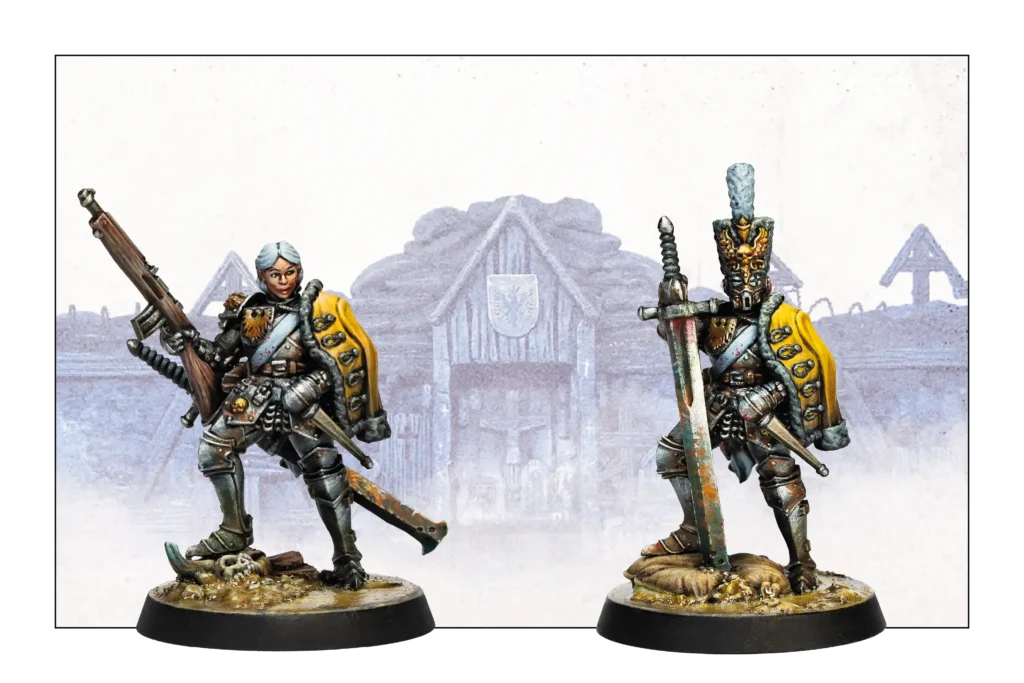
Frau Hauptmann Frederica von Goltz
The lineage of the Free State of Prussia is bejeweled with noble bloodlines, some that trace all the way back to the Teutonic Order. Far from being content with the laurels of history, Frau Frederica von Goltz wanted nothing more than to perpetuate her family’s legacy. Tutored from childhood in various styles of sword fighting from the finest blademasters her estate could afford, (including some rumoured to hail from the far east), Frederica exercised her notable privilege as a Junker aristocrat to challenge the traditions forbidding women from serving in the Stosstruppen. As part of her challenge, Frederica was subjected to the same tests as her peers, including many bouts of mensur duels. Since a mensur duel only ends when one party flinches or falls, her opponents were particularly vicious in their pridefulness. Yet, Frederica’s diverse swordsmanship yielded her more than enough victories to earn her position, and as many scars on her face to prove it. At the head of the 6th Gardekorps, Frau Hauptmann Frederica von Goltz dons her elegant handmade armour and wields a signature Tank-Splitter Sword with remarkable grace, its orichalcum-alloy edge scything through steel, concrete and flesh like grass.
Feldkaplan Rudolf Leopold III
Rudolf Leopold, third of his name, is a veteran of the war and was one of those to deem the young von Goltz of sufficient strength of character to carry the title of Hauptmann. Since that day, the military chaplain has served as something of an advisor to his Frau Hauptmann, and a trusty second in command for the 6th. Where Feldkaplan Leopold III is proficient enough in a firefight, he prizes (and therefore, advises) deployments where he can warrant the use of his own Tank-Splitter Sword, not only for the glorious slaughter in the Lord’s name, but also to justify the requisition of the chemical stimulant Holy Smoke without raising too much attention to his predilections.
Stosstruppen Jens von Bismarck
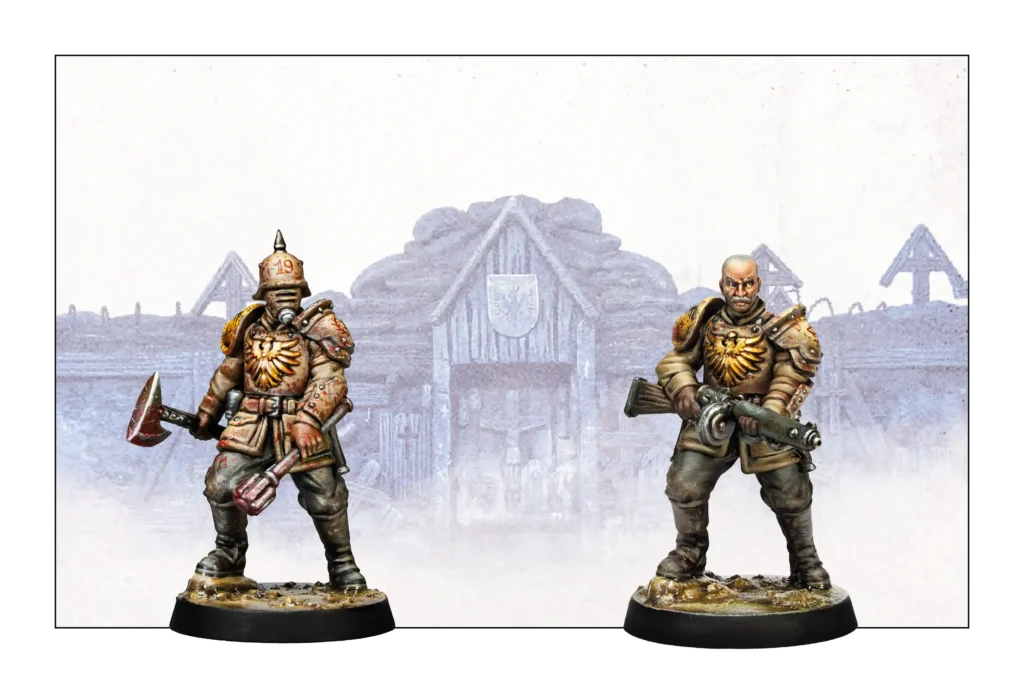
Jens von Bismarck joined the Stosstruppen later in life, using a similar appeal to his own noble bloodline as Frau Hauptmann Frederica. Being over a decade older than his peers, Jens struggled to keep up with the athletic supremacy of his fellow aspirants, however his fate was sealed for the better when it came to one of the more controversial tests – the Communicant Wrestle. Whilst very few are expected to beat the 10ft tall giants blessed by divine blood, assessment is made on an aspirant’s mettle, aggression and perseverance. Jens, however, broke a Communicant’s arm during his match through an expert use of locks and submissions on what he quickly gleaned was an injured limb. Frau Hauptmann appealed for von Bismarck to join her regiment despite his age, and saw plentiful value in his tenacity and reliable eye for an opponent’s weakness.
Stosstruppen Ludwig von Jahn
Ludwig von Jahn became the man of his household when he buried his parents at the tender age of 14. This responsibility, including the care of his younger brother Lars, weighed heavy on Ludwig, fostering a pooling darkness that he only could sublimate through competitive pugilism and recreational big game hunting. When he was recruited to join the Stosstruppen, Ludwig accepted this as a solemn assertion of his continued responsibility, with his skill as a hunter and lonesome tendencies affording him the honour of functioning as the 6th Gardekorps pathfinder. Though he would never say it, his brother Lars is the biggest reason his resolve hasn’t shattered under the weight of his tortured soul and the near obsessive joy he finds in slaying heretics.
Stosstruppen Lars von Jahn
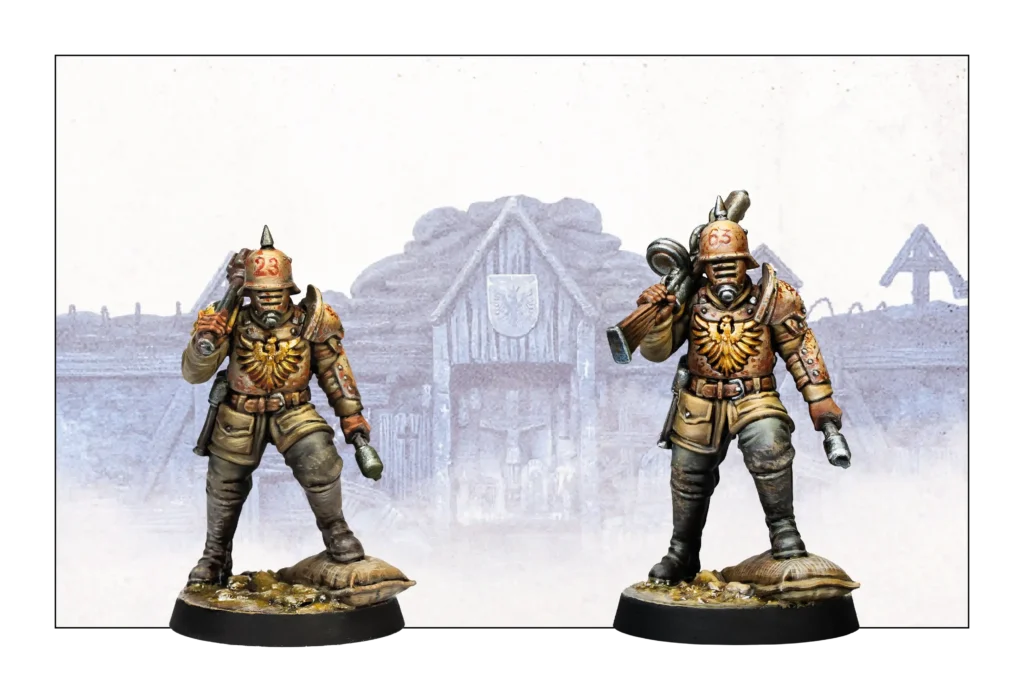
Lars is the younger brother of Ludwig von Jahn, and though but one year separates them, Lars still feels each second of their age gap. Lars craves to follow in his brother’s footsteps, so much so that he abandoned his goals of joining the Prussian Institute of Metallurgy to instead take to the frontlines in the Stosstruppen. Were he to open his eyes enough to realise, Lars has achieved many remarkable feats in his own right, including felling a dreaded Anointed warrior with nought but a pair of splintered trench clubs and, eventually, his bloodied fists.
Yeoman “Kleine” Hans Plamann
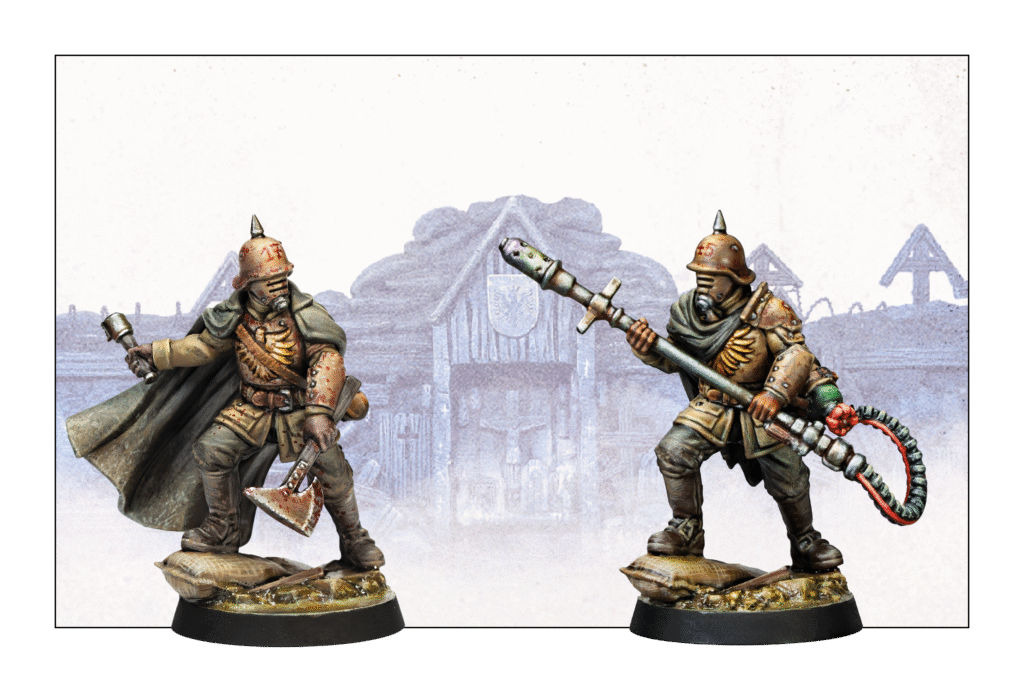
Though he has earned the nickname “Kleine” (or little) for his lean physique, Hans Plamann is anything but small in character. Even in the supporting role of a Yeoman in the 6th, Kleine Hans’ personality is eccentric and electric, infectious in his piety and uncompromising belief in his regiment’s ability. As such, Kleine Hans is given the ceremonial responsibility of carrying the regimental Glockenspiel, ringing out staccato metallic rhythms to maintain the charge of his peers. The rest of his regiment joke that if Hans weren’t so good a musician, he’d make for a great soldier.

Yeoman Hugo Graff von Ense
Barely an adult, Hugo Graff von Ense is a curious addition to the 6th Gardekorps, selected by Frau Hauptmann herself. Hugo is a perfectly serviceable shot, able to hold his own with a club and hurl a grenade as far as his peers, but it is his strangely inviolate sensitivity that drew von Goltz’s attention. In the quiet moments between skirmishes, Hugo writes poems about home that, though none would admit, have brought his fellows to tears more than once. In a way, Hugo represents a future for Prussia, one beyond the war, where the glory of the Free State can be venerated in art for art’s sake.
Yeoman Otto Laubach
Otto Laubach’s greatest shame was that he failed to be promoted to the rank of Stosstruppen, not for his lack of skill, athleticism or dedication – but rather his lack of cooperation. During a coordination drill, Otto broke rank from his fireteam to capture an objective. Though he achieved his aim, Otto was deemed ineligible to be promoted due to his lack of respecting the fine-tuned teamwork of his regiment. Two deployments later, Otto strives to prove his cooperation and selflessness by performing risky battlefield surgeries, or tackling heavily armoured opponents with the wicked licks of his flamethrower.
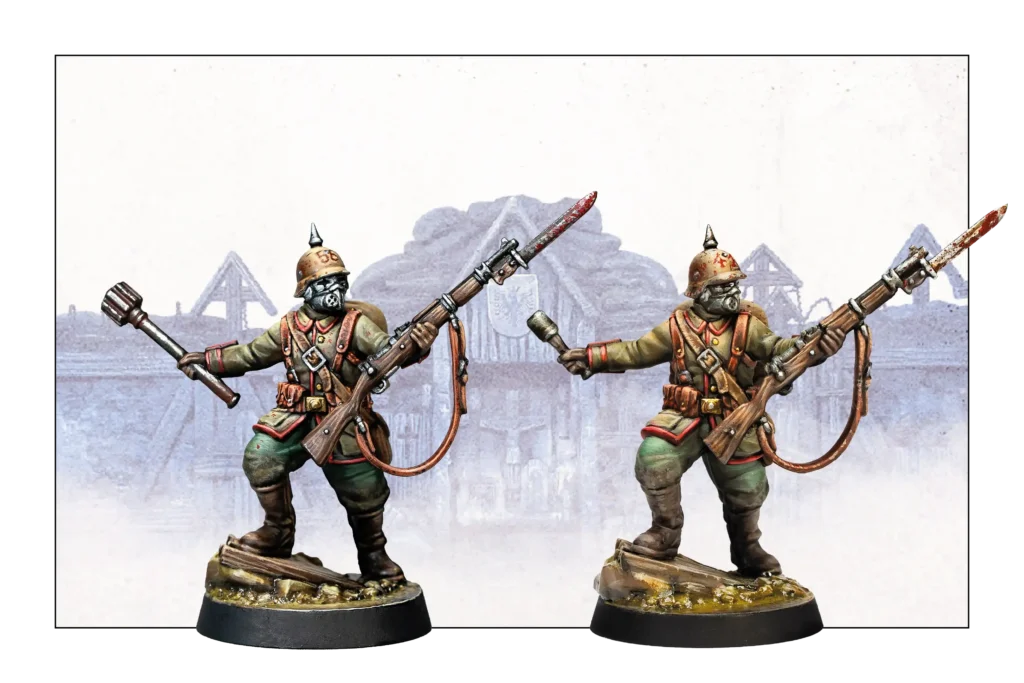
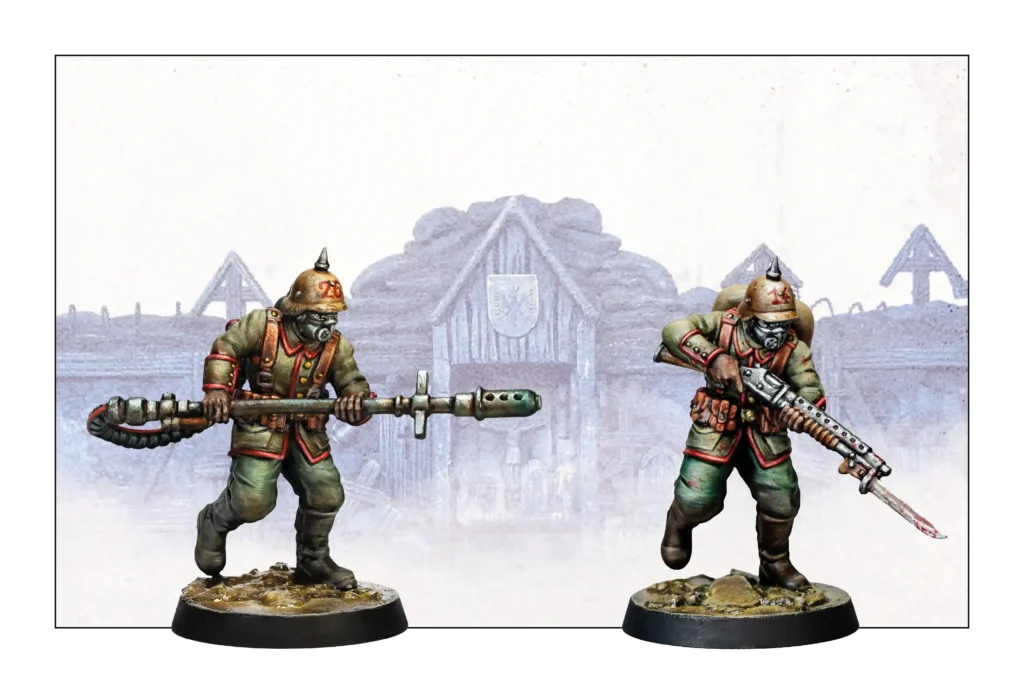
The Prussian Stosstruppen warband are currently available for preorder on our webstore.