



Rules Preview, Trench Crusade Terrain
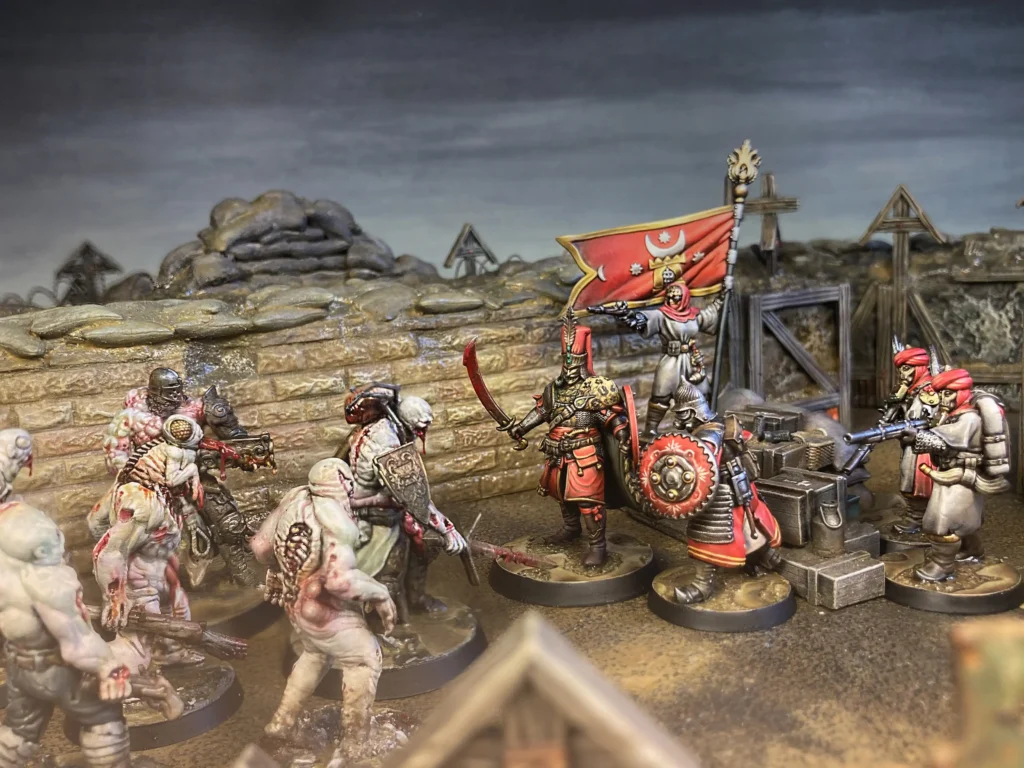
Terrain represents the setting in which we deploy our plastic soldiers, marking the time and place where a Trench Pilgrim and Plague Knight cross swords, for example. Trench Crusade is unique in that it is, in part, defined by terrain; Trenches are in the name, after all. However, the war between Faithful and Fallen extends to every theater of Europa, from the Hellmouth of the North hiding deep in the frozen Kola Peninsula to the blood-sodden beachheads of the Mediterranean to the swine-laden ruins of Avignon. The trenches are but an avenue of war that takes part in a much grander strategy.
Mechanically, models in Trench Crusade 1.0 will interact with terrain similarly to how they have in the playtest ruleset. More importantly, however, this ruleset offers better insight in how you, the player, may interact with the battlefield. The terrain of Trench Crusade now features its own chapter, detailing use of individual terrain pieces, such as trenches, ruins, or hills. These are by no means hard and fast rules (we can’t define every piece of terrain!), but rather offer guidance on the majority of pieces you might place on your battlefield.
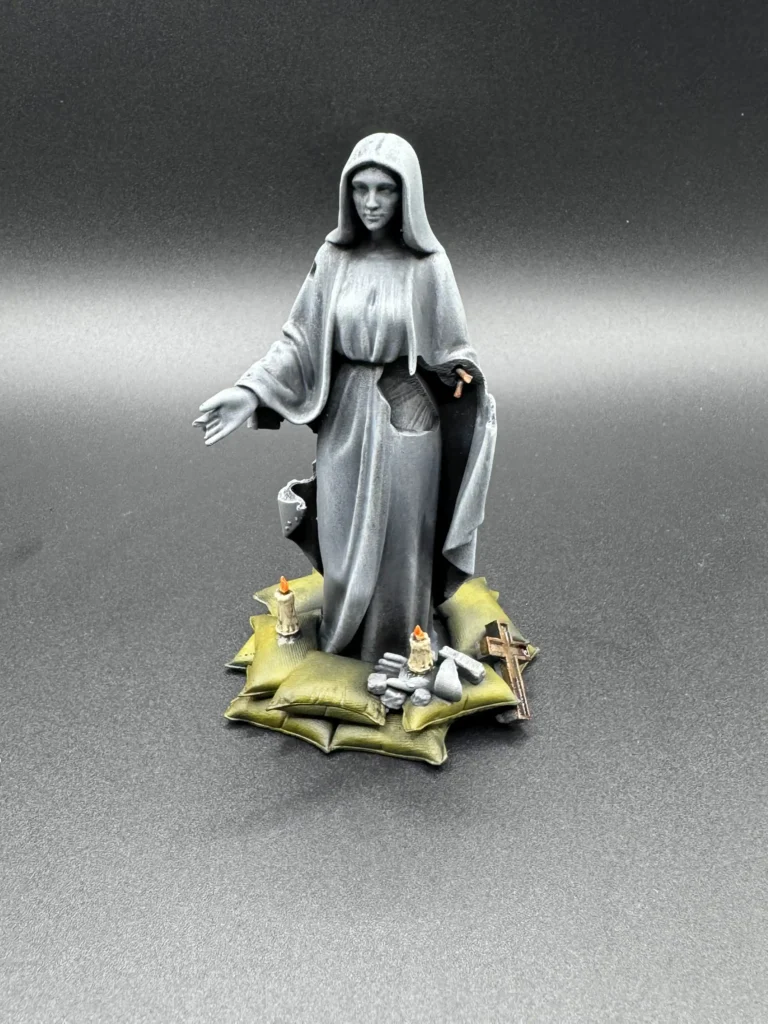

Each scenario of Trench Crusade will now include a new set of battlefield guidelines referred to as Battlefield Archetypes. These archetypes highlight a collection of terrain pieces that best fit the atmosphere or conditions of the battlefield. For example, the Relic Hunt scenario uses the No Man’s Land archetype, perhaps representing the search for treasure lost in the mud and muck of a burned out forest. The High Ground scenario uses either the No Man’s Land or Decimated Ruins archetype, perhaps representing a battle to recover hilltop artillery or to occupy an ancient keep.
A labyrinth of passageways and littered with Faithful shrines that cannot go unseen from any angle, Fabian’s table is very well suited for a Trench Lines battlefield. Commonplace for a game of Trench Crusade, these battlefields are deceptively flat, splitting the terrain into a battle between the advantage of height and the safety of low ground.

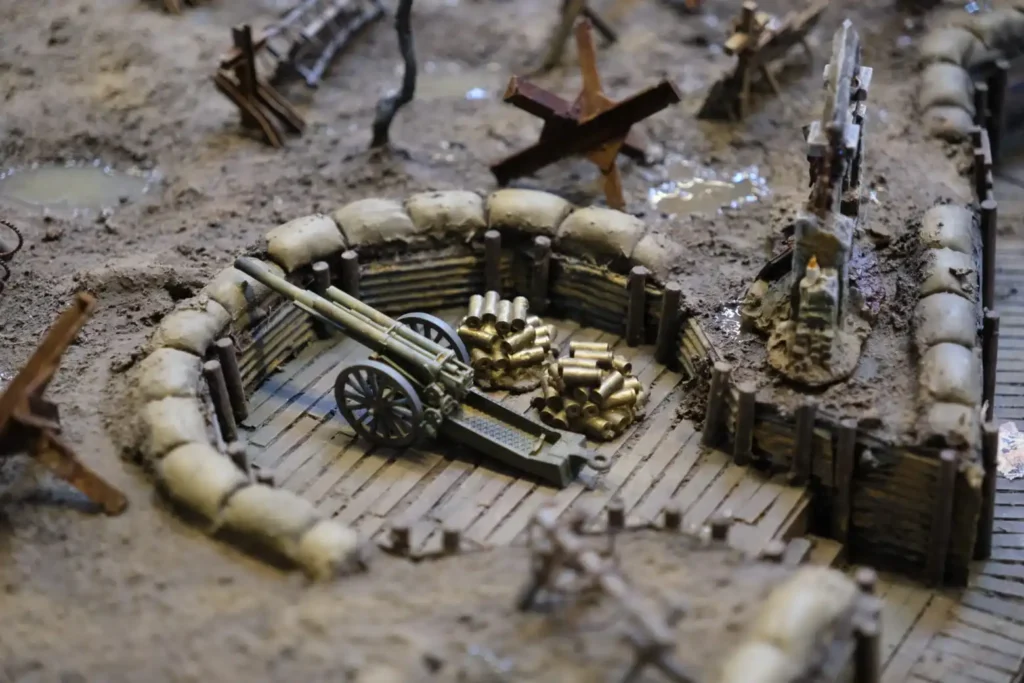
In contrast, a Decimated Ruins battlefield represents the cities, towns, and villages caught in the throes of war. Homes are now bunkers, warehouses only store the dead, and you can’t cross the street without finding yourself in the sights of a gun team. These battlefields are often defined by verticality and complexity, offering new strategies with the benefit of vast height and endless cover, usually forcing the fight into brutally close quarters.

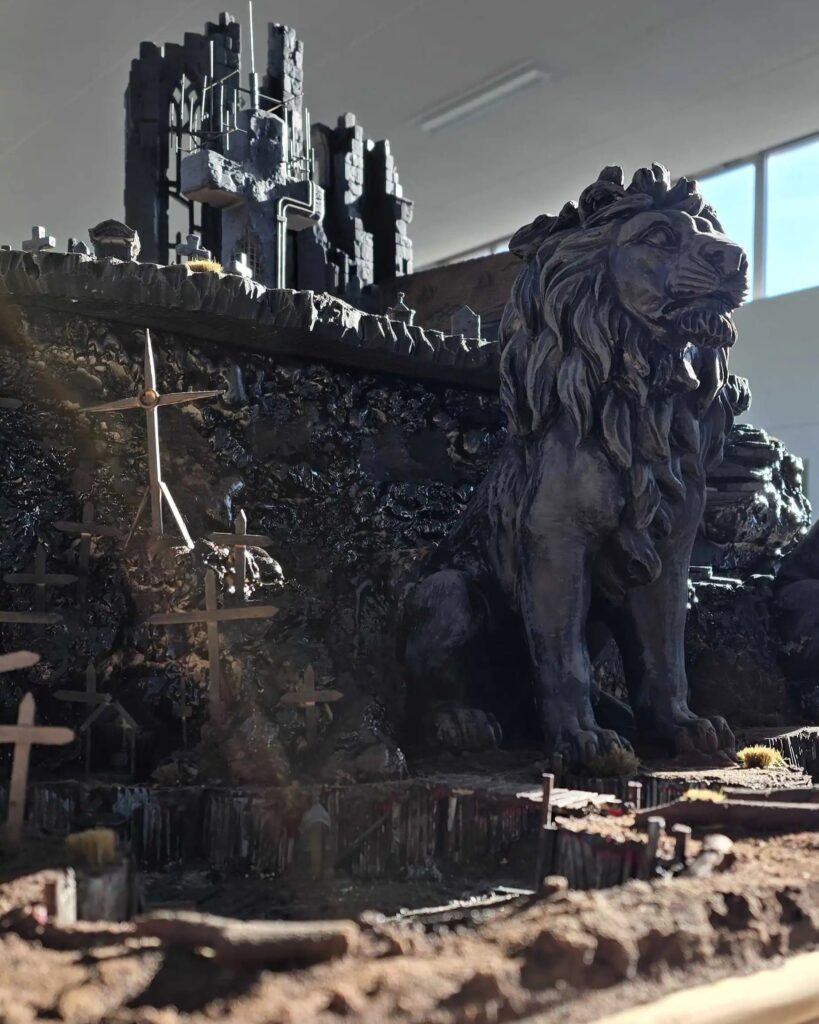
There is no correct way to build your battlefield. You might want to try out some freshly printed Trench Crusade terrain or maybe you favour something hand made. Trench Crusade is built on creativity and the drive to follow a unique vision. Lean on your community for inspiration (like we did in this article!) and learn, share, iterate, and grow.