



Inside the Trenches
by Tuomas Pirinen
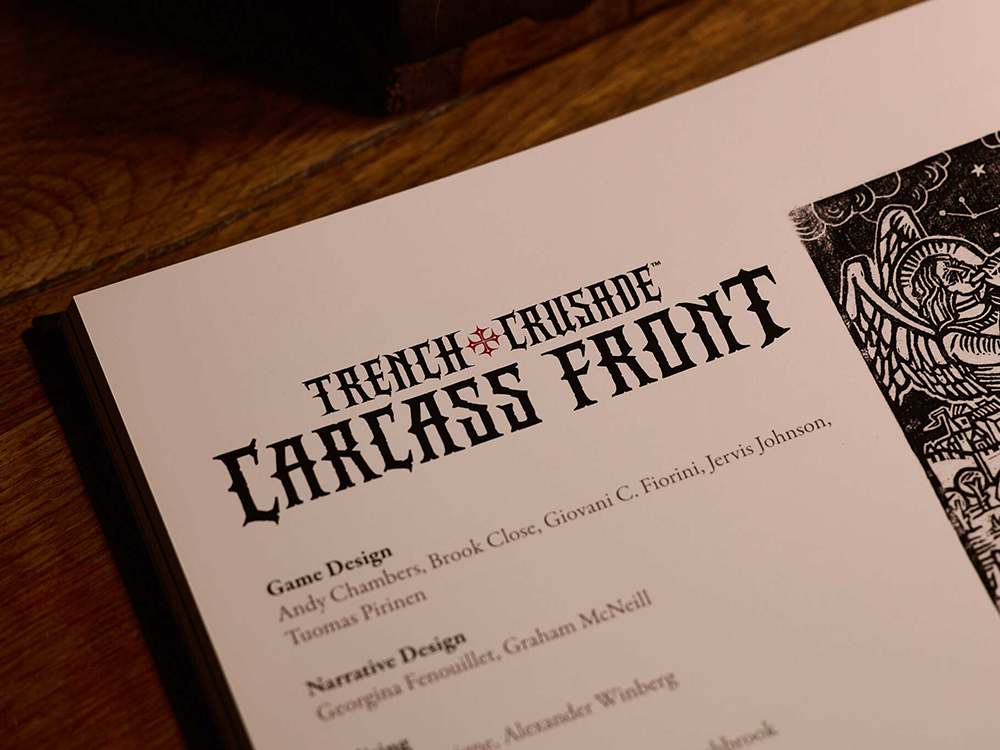
One of the first things I always do whenever I see a new game is released is check out the credits. In my 30+ years creating games, I (like many other gaming aficionados) have come to recognise which artists, writers and game designers create products I like. One of the great joys of this hobby is to see when your favourite creator has brought out something new for you to discover.
To my dismay, in recent times the games industry increasingly is moving away from giving credit to artists, game designers, miniature sculptors, painters, editors, and magazine staff (to name but a few), and instead either removing the creators’ credits completely or refusing to refer to them by their full name. I am staunchly against this development.
First of all, I view this as an anti-customer policy. Just like with movies, books, and many other forms of entertainment and art, a creator that we like is the surest guarantee of the quality of a product we are about to purchase. For example, when I see that a movie is directed by Robert Eggers, I know I’m in for a wild ride and will purchase a ticket with confidence. The same goes for music, comics, video games, literature, TV series, and virtually every other creative endeavour. So why would tabletop games be any different? I believe that we who make the games have a duty to be transparent with the fanbase about who is behind the products we are asking them to buy.
Second, it severs the human connection between the players and the creatives behind the games they enjoy. Tabletop games are above all a communal experience in which the social aspect is the glue that makes this hobby so special. You learn to know your favourite creators and come to recognise their unique style, and often have a chance to interact with them as human beings through correspondence, meeting them in person at conventions and store events, or even making your own creations inspired by their works. This is the secret sauce that I think truly sets the tabletop gaming hobby apart.
It is also important to the careers of the creatives themselves. Credits allow them to build an independent following, allow potential employers to know them by their work, and establish a body of work that is easy to verify. It is vital to their career prospects; well-known writers, game designers, artists, and other creatives will be in a much better bargaining position when negotiating their contracts. This, too, is beneficial for the players. A writer, artist, sculptor, miniature painter, graphic artist, or editor that can pay their rent and knows where their next meal is coming from is surely a much happier one, and far more likely to create games and supplements that will delight and entertain you than the one who is scrabbling to make ends meet.
Crediting the workers is also beneficial to the industry as a whole, since it acts as motivation for new talent to try their hand at creating games. I doubt that I myself would have pursued a career in game design if I had not seen the names of my childhood heroes in print and thought to myself, “One day I would like to see my name in an awesome game supplement such as this.” Take this possibility away, and the talent pool shrinks both in size and quality.
All this does not mean that credits should be forced upon anyone who wants to be left off them. It is true that in this age of global social media, a creator can easily become a target of hate campaigns by grifters who do not care about this hobby that we cherish so much, and instead double down on outrage farming in a cynical cycle of stoking anger and cashing in on ad money. A creator who uses his or her own name and face does expose themselves to such backlash. Not everyone is built for it, and some people value their anonymity. In addition, some of the very finest co-workers of mine value their privacy over the kudos of seeing their name in the credits. However, the right way to address such concerns is not to deny credits to everyone, but rather to allow those members of your team who prefer to remain anonymous to do so at their request.
It is the standing policy of Factory Fortress to credit all contributors to our projects and products, whether their part is large or small, unless they specifically request otherwise. I remember when I saw my own name in the credits of a game book for the first time. Few things can compare to that sense of accomplishment and excitement. I hope we give an opportunity to many others to experience the same in the world of Trench Crusade.


Tuomas Pirinen
Tuomas is the designer of the Trench Crusade game and one of the founders of Factory Fortress Inc. He has worked in the games industry for over 30 years and has dozens of both digital and tabletop games under his belt.
His day job is to run the Factory Fortress game design department and work hands-on with new rules and lore.