



The Painting and Photography of Alessandro Bonavero
an interview of Alessandro Bonavero by Lyle Lowery

There is an astounding amount of creative energy around Trench Crusade. People are constantly sharing with us the incredible works of one artist after another. That’s how I found out about the work of Alessandro Bonavero: Tuomas reached out to me to share a portfolio full of Alessandro’s photography. I was immediately captivated by the rich textures, the dramatic lighting, and… the real fur!?! More on that later!

Lyle: Alessandro, your models and your photography are both incredible. How do you achieve such interesting textures on your models?
Alessandro: Lyle, thanks immensely for having me here, and I deeply appreciate your words.
Texture is something that, especially with 32mm models, can be challenging to manage and render faithfully to the scale of the characters.
There is something about creating texture that gives the model an uncanny energy, a sense of weight and presence in the real world. Physical texture changes how light reflects and scatters on a certain surface, so we stop reading it as “just a toy” of plastic/resin, and perceive it as something more.
Technically, every type of physical intervention on a model can add some kind of texture, either by addition or by subtraction.
How heavily we load our brush when using acrylics, and how we impress the paint on the surface – drybrushing, stippling, and so on – can create slight differences in volume. These differences may seem unnoticeable, but they quickly add up on a miniature scale.
Apart from traditional acrylics, I also use enamel washes and effects, oil-based paints, pigments, and texture paste. In my experience, all of these have a certain way in which they add texture buildup. And each excels at doing different things. If carefully controlled, they give us granular textures that end up looking perfectly in scale with models.
Another way is removing material or paint, using sharp tools or solvents. At first, it sounds utterly ridiculous to think about damaging our models or risk ruining a piece after hours of work… but this process can be just as deliberate and controlled as any other technique we’ve been accustomed to. And just like any other technique, it can be mastered. It becomes an integrated part of the workflow.
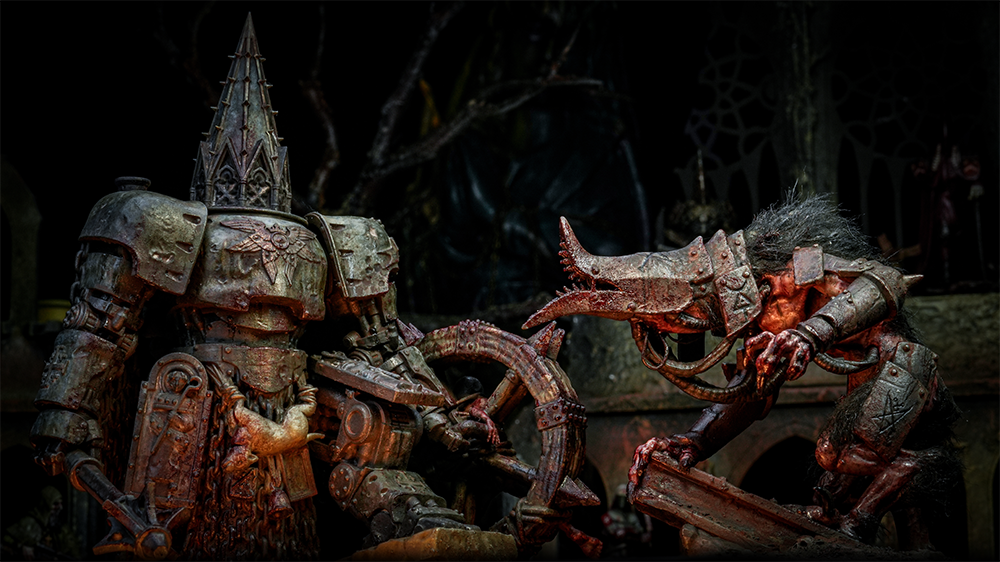
Texture applications can be introduced at different stages of the process. Sometimes it can be part of the painting process itself, added just at the very end, or done before we even prime the models. It depends on the nature of the texture that we want to recreate, and the personal style we are going after.
Evaluate every material and surface variation. What kind of texture do we want? Is it an accumulation of dirt and grime or splashes of mud from the trenches? Or is it inherent to the material itself, like how certain types of armour can look after a particular forging process? Asking these questions helps determine not only how to create the texture, but also when to introduce it in the process.
Equally important is keeping materials distinct. Whether something represents metal, wood or cloth, each surface needs its own identity.
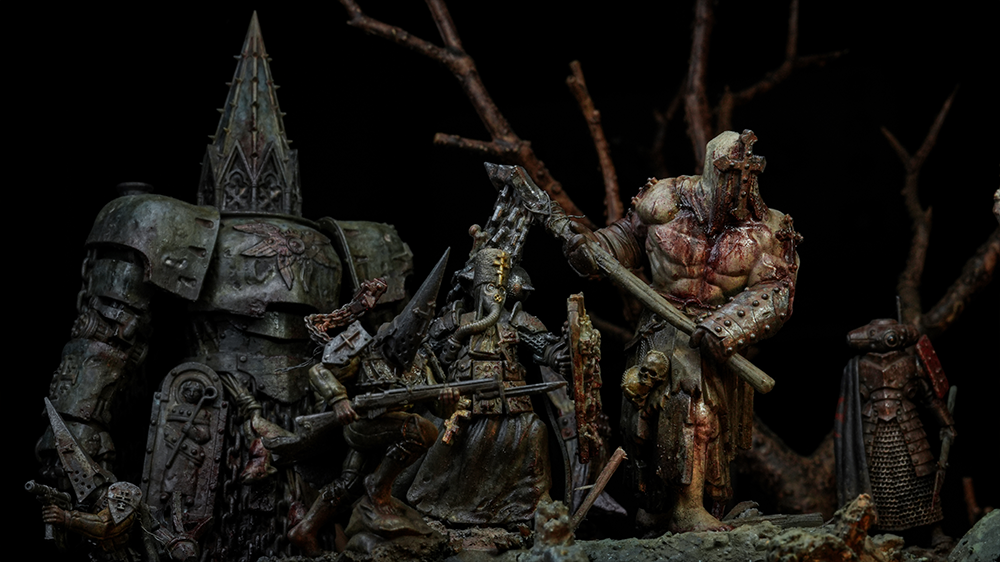
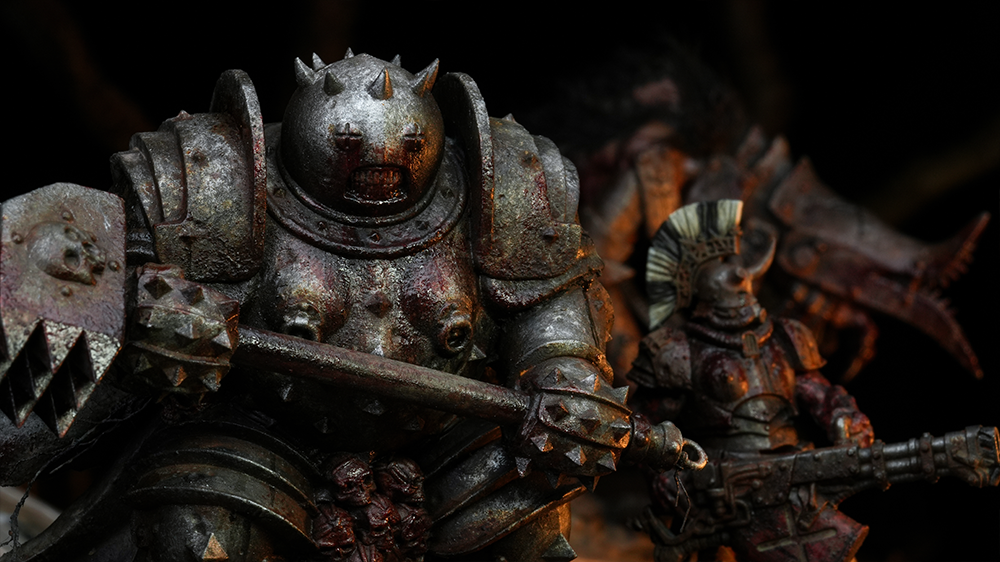
L: The way you photograph your models is so dramatic. Can you tell me about your photography setup? What kind of lighting and background do you use?
A: I shoot with a camera and macro lens, and all my subjects are typically shot at a maximum of 12 inches from the camera – and at the minimum, they almost touch the lens. At this level of magnification, any single granule of dirt and imperfection will be completely exposed. Hair, dust from the studio, tiny little particles… all of these can build up during all the stages of production, from the building, to painting, handling them for photographs, and when posing them. So I always make sure to keep models and tools as clean as I can.
Because of my camera settings and the way I like to shoot, I need to make sure to feed the lens a lot of light, and I mean a lot – while keeping it close to the subjects. So I use a main overhead light of around 2200 lumen of intensity, and two secondary lights – those will help me either reinforce the main light source or give additional atmospheric lighting. All of them are mounted on flexible arms, so I can simply rotate them however I see fit, and I can also regulate the intensity and temperature of the light for maximum control.
The black background that you see in most of my photos is not a backdrop. It’s just the plain darkness of my room, beyond the reach of light. The only elements that I actually place behind my characters are scenery pieces and decorations, which aim to enhance the mood of a scene and break up the uniformity of the negative space.
I often help myself build the scene by stacking small boxes or objects to create different levels of height… placing characters or scenery on top of them and at different angles. I believe this is very important in making the scene look dynamic.
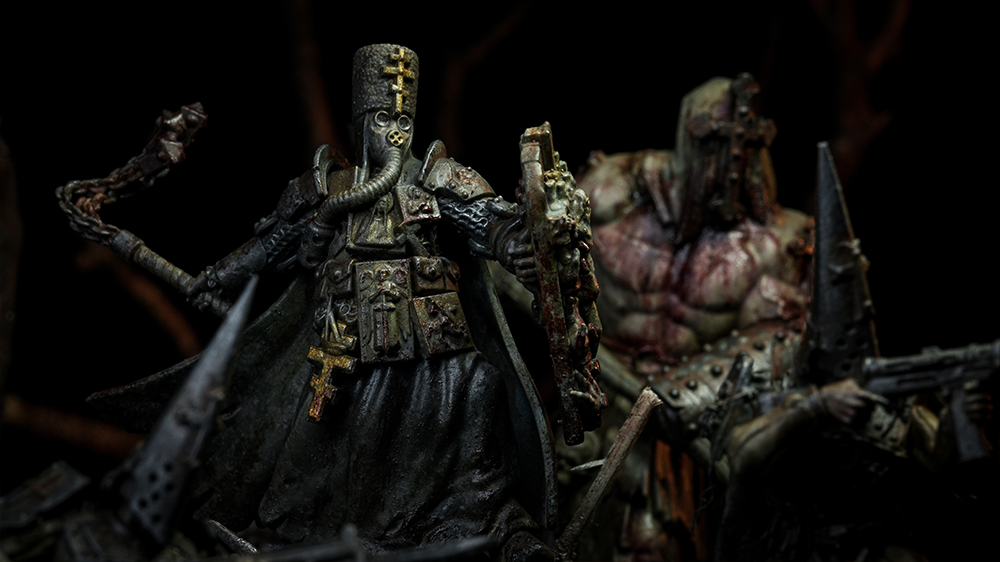
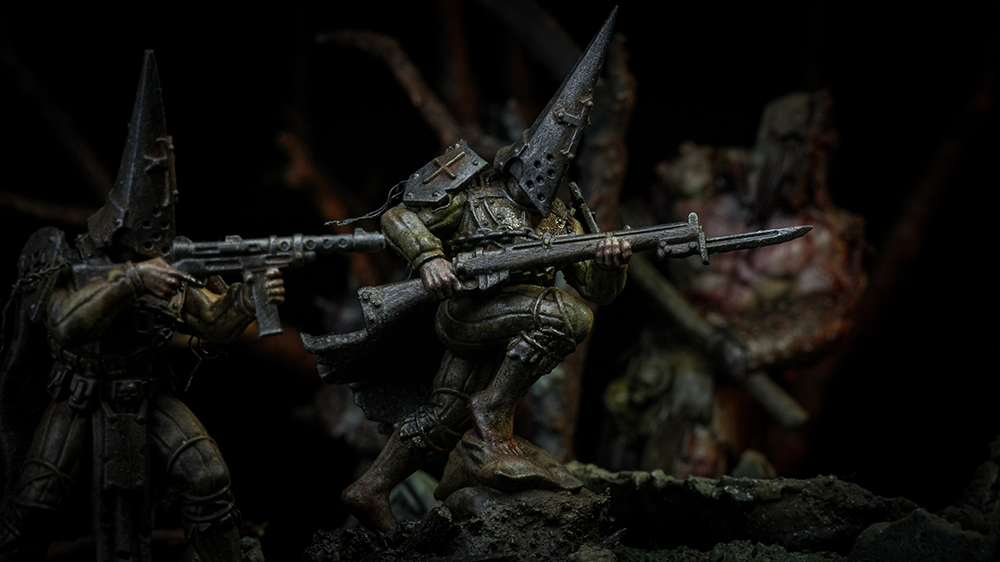
L: Your use of shallow depth of field to make this photo look like it’s a moment in time in a larger battle, yet keep the focus on one model, is really effective in this photo. Any tips for achieving this effect without overcooking it?
A: In macro photography, the window of depth of field is very tight and narrow. So this means even mere millimetres of distance between models or scenery can drastically affect whether something stays in focus or not.
What may look like a wide aperture here, in reality is a pretty moderate F/13. At this level of magnification, the physical distance between the characters is enough to prevent them from being sharp all at once. Everything falls out of focus pretty easily. That allows me to get very close and intimate with one subject if I want to, while still suggesting a broader scene around, retaining this feeling of a shared struggle.
Work with the physical distance of the miniatures. Use strong directional lights, making sure to feed a lot of light to the camera. And most important of all, shoot in Manual focus. It gives complete control of where the viewer’s attention goes and adds some personality to your photos.
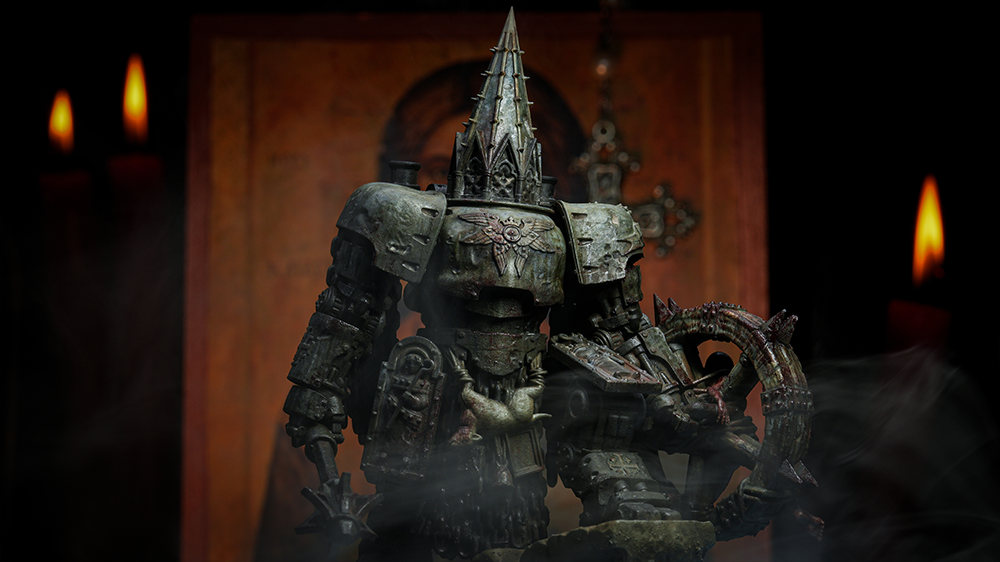
L: I particularly love this photo of the Anchorite Shrine. It’s beautifully lit from above, and the background is stunning. What did you use for the background of this photo?
A: In my free time I enjoy driving through villages in the countryside, where thrift and antique stores often hide unexpected treasures. Over time I’ve filled my home with all sorts of things, or they were simply passed on to me. Symbols of Faith, relics of war, strange and weird pieces that have been through the unimaginable. With time, eventually they become the backgrounds of my photos if they fit well enough.
In this particular case, the backdrop is this wonderful Orthodox Christ Pantokrator icon, which felt perfectly aligned with the atmosphere. I also used lit candles, which are almost always present in my studio during the long dark days of winter – except when I’m working with solvents. This dim space filled with incense and the smoke of a thousand cigarettes helps me capture the mood before I take the shots. Terribilis est locus iste.
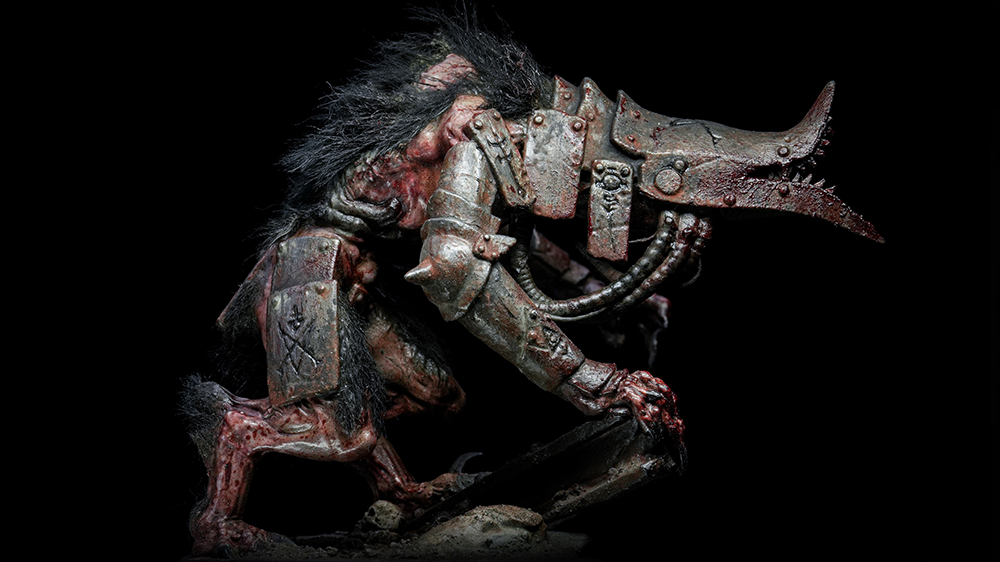
L: Now let’s talk about this fur! Grimy textures are one thing, but this is a whole other level! What inspired you to use real animal fur, and how did you do it?
A: Even before I ever had access to the internet, I felt the urge to start placing hair on miniatures to make absolutely deranged little characters that looked like they were coming out of a creepy stop-motion film. Almost purposefully comical and absurd.
Then, circa 2017 I stumbled upon the work of Kendon Oates – Zatcaskagoon Miniatures of the Grimdark Compendium. Seeing one of his pieces with a real fur cape has encouraged me to try to make it look as natural as possible. To take it seriously.
Hair is one of many ways to add “impossible” textures to miniatures. There is nothing that scatters and reflects light quite like real hair. Sculpting can only go so far, no matter the skills. With chains, hair, cloth, fur, real fabric and wires, I often make my own details and decorations to miniatures for this very reason, to achieve a level of immersion and uncanniness. If done right, it can make your skin crawl. Of course, as with all techniques, understanding where to push – and intentionally exaggerate – and where to hold back, is what makes the result truly believable.
I get the hair from ethically harvested animal hide, fly-tying material. I start by analysing where the hair or fur should be naturally growing… and start gluing the strands whisker by whisker, following a natural pattern and direction. I pay attention to not exaggerate with glue – especially in transition areas – as we risk building up too much material and generating ugly crusts.
I always work with proper ventilation and wear a respirator, as the fumes can be harmful.
Once applied, I comb it, trim it and style it. For an insane, feral creature like the War Wolf, it’s important not to exaggerate though. Anything too uniform will look a bit too artificial.
L: Is there any parting wisdom you want to share with anyone who might be inspired by your work?
A: The hobby has more possibilities than ever before. Model customisation can go to extreme levels with what is available to hobbyists right now. But character appearance is tied to something deeper. It is born from the world beyond the miniature. Before you even think about creating the single model, envision the universe it exists in and let yourself be inspired. What kind of environment shaped these characters into what they are? How does that world affect it, physically and mentally? From there, follow its existing aesthetic and try to render it as best you can. Or develop it, shape it, expand it, into something personal.
Grimdark to me is visceral. It should grab you by the throat. Make you question how something like this could even exist. An opportunity to convey what a universe could really look and feel like. It’s a methodology and mentality where the intention, the process, the final result and the presentation converge into one coherent vision.
Thank you, Lyle, for giving me this space.
L: Thank you, Alessandro, for sharing your time and your incredible art with us!
If you want to see more of Alessandro’s art, visit his Darkes Ages Workshop Instagram page here.
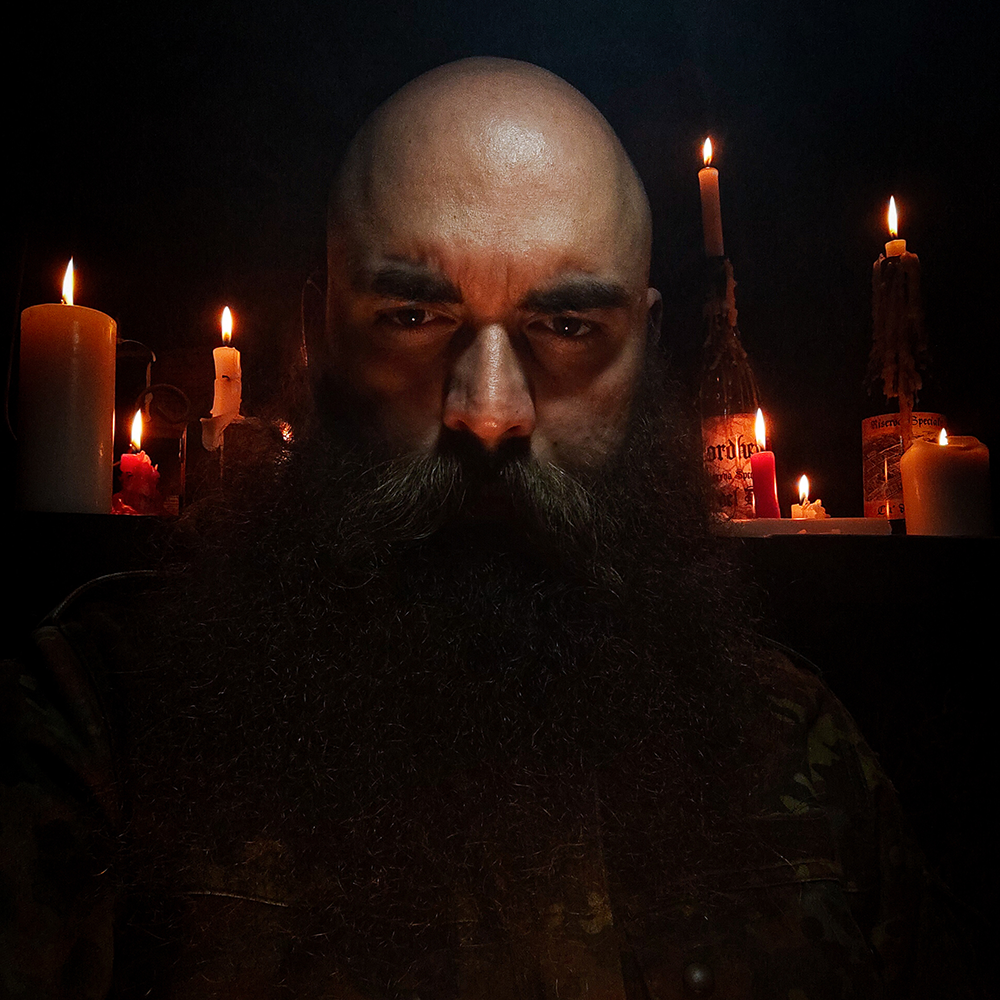
Alessandro Bonavero
Dark Ages Workshop was born from a need to give form to the bleak corners of my imagined worlds of fantasy, or those I read about, without compromise. What began as an experiment for my own tabletop needs became an obsessive search for practical and unconventional techniques to paint, model, and present miniatures as one coherent vision. Romantic at heart, I am drawn to haunting atmospheres rooted in the grimdark, grotesque, apocalyptic, and esoteric. Trench Crusade felt like a match made in Hell, and contributing to its world has been a true privilege.
Lyle Lowery
Lyle is the creator and launch editor of The Trench Wire. He’s a veteran of the tabletop games industry with over a decade helming two of the hobby’s best loved miniatures wargaming magazines: White Dwarf and No Quarter. He now runs an editorial content and creative consulting business and has clients including some of the industry’s top companies and brands. He’s an avid hobbyist who should probably paint a bit better after all this time. He loves giant robots; dogs; and his wife, Helen.