



Painting the Leviathan
by Thomas Elliot. Art by Thomas Elliot
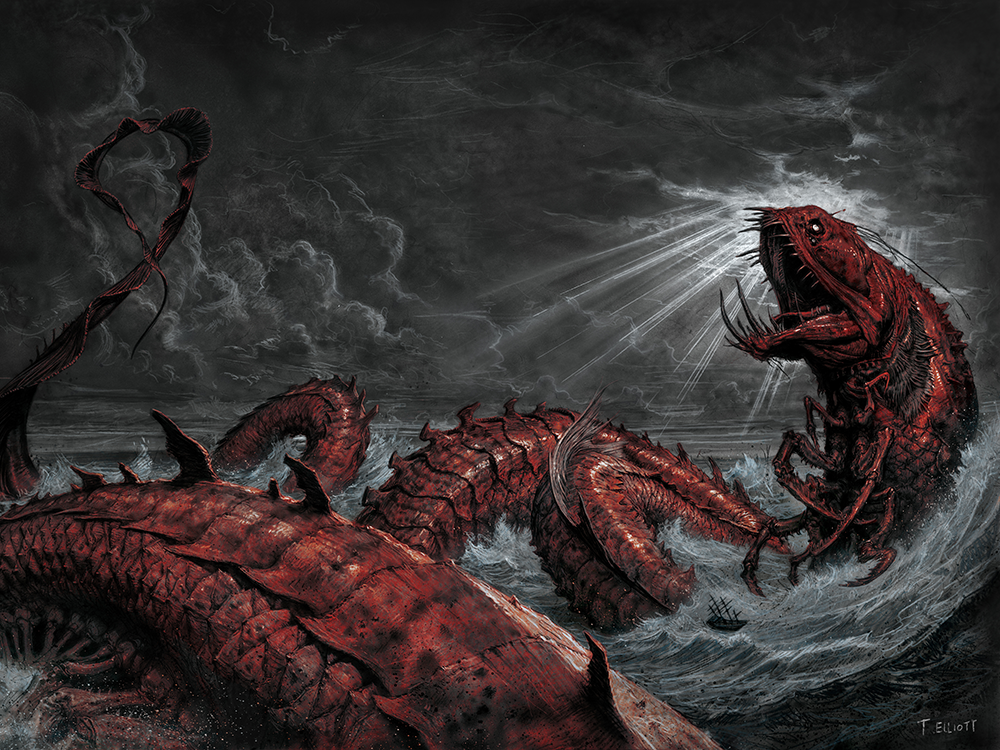
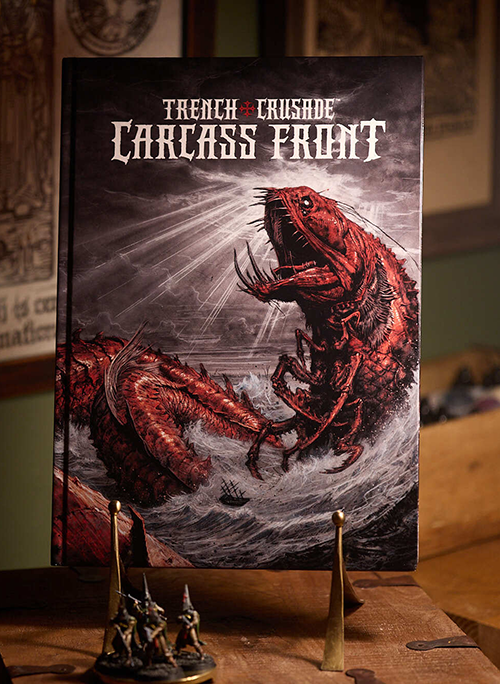
Late in 2025 I received an email from the great Pontifex himself, Mike Franchina, asking me to do an illustration for Trench Crusade. This wouldn’t be just any illustration, however. This would be the cover for the Carcass Front rulebook! The cover art would be a thing of biblical proportions, depicting the apocalyptic beast itself – the Leviathan – in all his unholy glory.
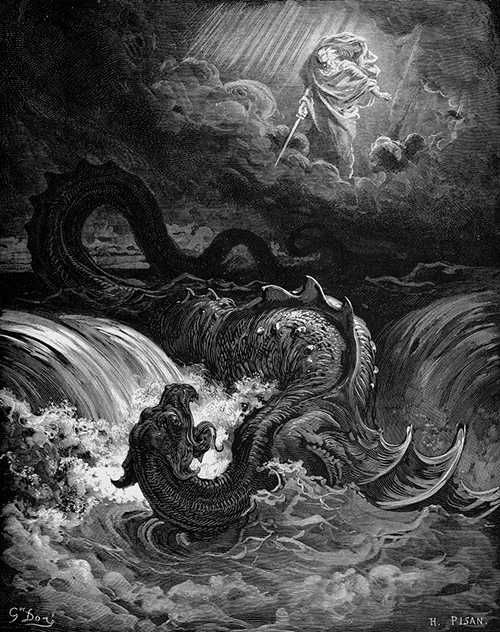
Mike was great at directing me towards the vibe he had in mind. He shared with me Destruction of Leviathan by Gustave Doré (right) as well as lots of old, quirky depictions of giant sea monsters from illuminated manuscripts that showed we were aiming for something that would look at home in an ancient esoteric tome.
As well as the picture itself there would be other considerations. The idea was that the one picture would wrap around the front and back of the book, with the right hand-side being the front cover. This meant all the important information would need to be on the right. In-addition, there would need to be space for the title and other bits of text. With all this in mind I got to work.
Destruction of Leviathan by Gustave Doré –This work is in the public domain in its country of origin and other countries and areas where the copyright term is the author’s life plus 100 years or fewer. {{PD-US-expired}}
Nightmares from the Deep
The first port of call would be figuring out what the hell the Leviathan would actually look like! With deep sea fish having a nightmarishness to them and residing in the black depths of our own planet, having one enlarged to catastrophic proportions seemed only appropriate. Page after page was filled with scribbles of Viper Fish, and other deep sea creatures, to build my understanding of their shapes and what it was about them in particular that make them appear uncanny. After having a rough idea of what I wanted the Leviathan to look like – a mashup up of a Viper fish and a crustacean, wrapped up in a sea serpent – I set about doing thumbnails for the illustration itself.

Showing huge monsters is challenging. It can be hard to make the scene feel deep and immersive when you are have to put the creature so far back in the frame to show it all. That, coupled with the fact I couldn’t have the Leviathan going off the top of the page because of the title text, would mean I would have to get creative to show the scale of Leviathan. After some experimenting I hit on having coils of the great sea beast in the foreground, showing us the immensity of the nightmare. The coils then roll off into the distance, leading us to the focus of the picture, Leviathan’s head. Just for good measure I placed a tiny ship in the foreground and made sure to not make the waves too big compared to the beast. After receiving the go-ahead from Mike I was ready to embark on the illustration itself.

Traditional and Digital
I knew I wanted to do this picture traditionally as much as possible. I had recently begun experimenting airbrush painting and had found it surprisingly versatile in capturing colours and textures. One of the beautiful things about airbrush is that by laying values in thin layers it allows the underdrawing to show through, meaning you can front load the picture with a detailed under drawing and have the information present in the final painting. With the pencil drawing I focused particularly on making sure the flow of the picture was correct and the shapes and weight of Leviathan were right before going down the rabbit hole of rendering all the scales and wonderful details.

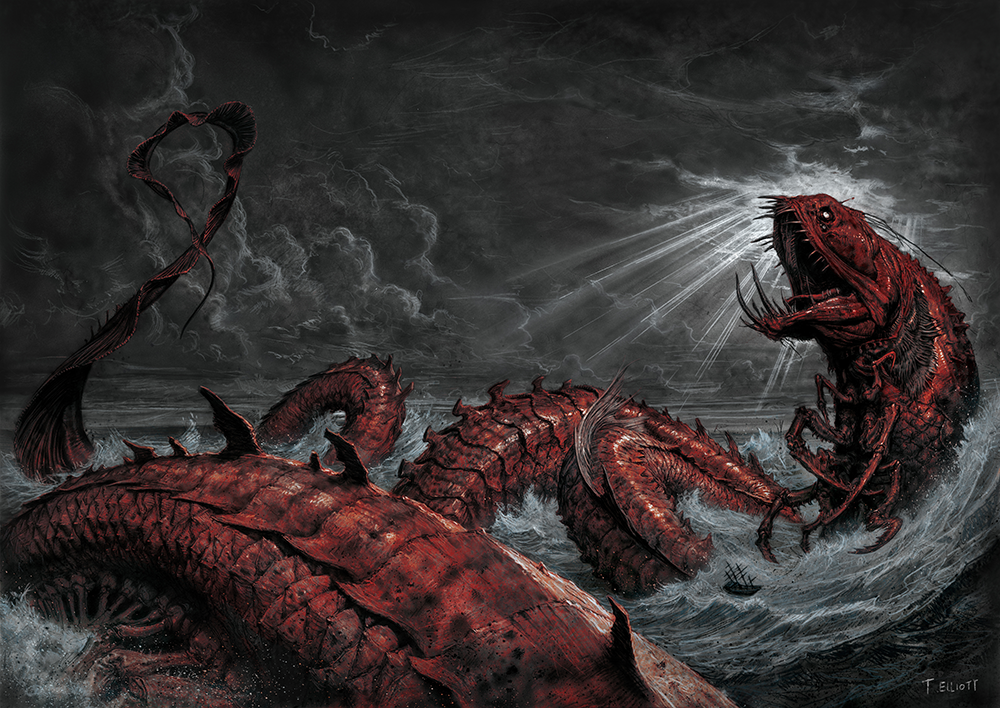
Once the pencil drawing was done I did a digital mock up of how it would look with its full tonal range. With that in hand I began painting over the drawing with airbrush. The airbrush ultimately gives very soft edges which contrast very nicely with the pencil work, which usually has sharp lines. Between the two you can get a very satisfying dynamic going, something which I feel is particularly visible in the gestural marks of the waves.
The final touch was to add the red of Leviathan. I had decided to do this digitally after the black and white painting was completed so that I had the option to play around with different options and find what works best for the picture. I arrived at a subtle but firm red that left most of the underpainting visible and contrasts nicely with the cool greys of the rest of the picture.
That’s the brief overview of how I painted the cover for the Carcass Front rulebook. I feel this picture is successful and I don’t think I would change anything if given the chance. Which is just as well as, there are many, many exciting things in the Trench Crusade world to show in the future!

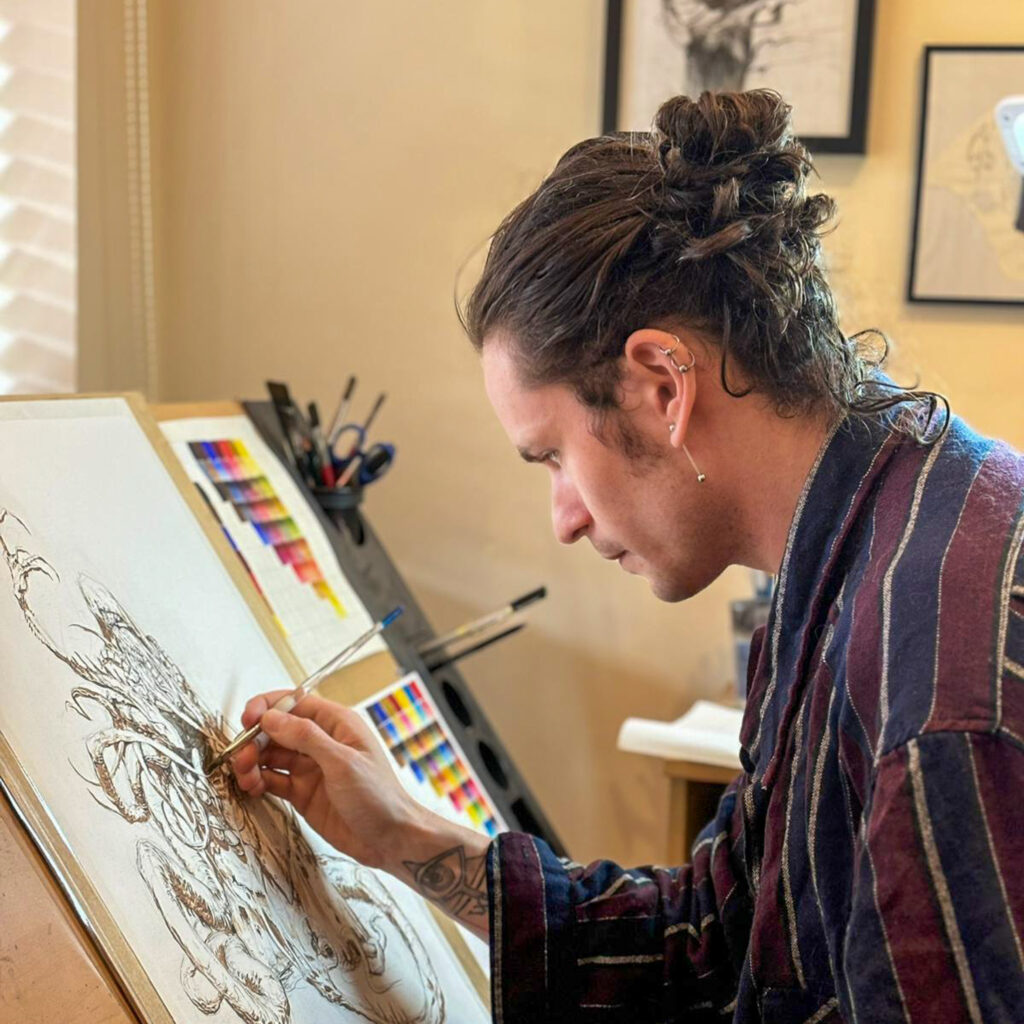
Thomas Elliott
Thomas Elliott has worked across a wide spectrum of the gaming industry, from Magic the Gathering for Wizards of the Coast to producing board game art for Asmodee. He is best known for his contributions to Games Workshop, where he worked on Warhammer 40,000, Necromunda and Age of Sigmar. Thomas has also worked in the video game space, producing art for games like Dying Light: The Beast and most notably, the box art for DOOM: The Dark Ages. Thomas now works for Factory Fortress and is looking forward to bring the world of Trench Crusade to life with mind-blowing artwork.