



Writing for Trench Crusade as a Cleric
by Nicholas Ceccarani
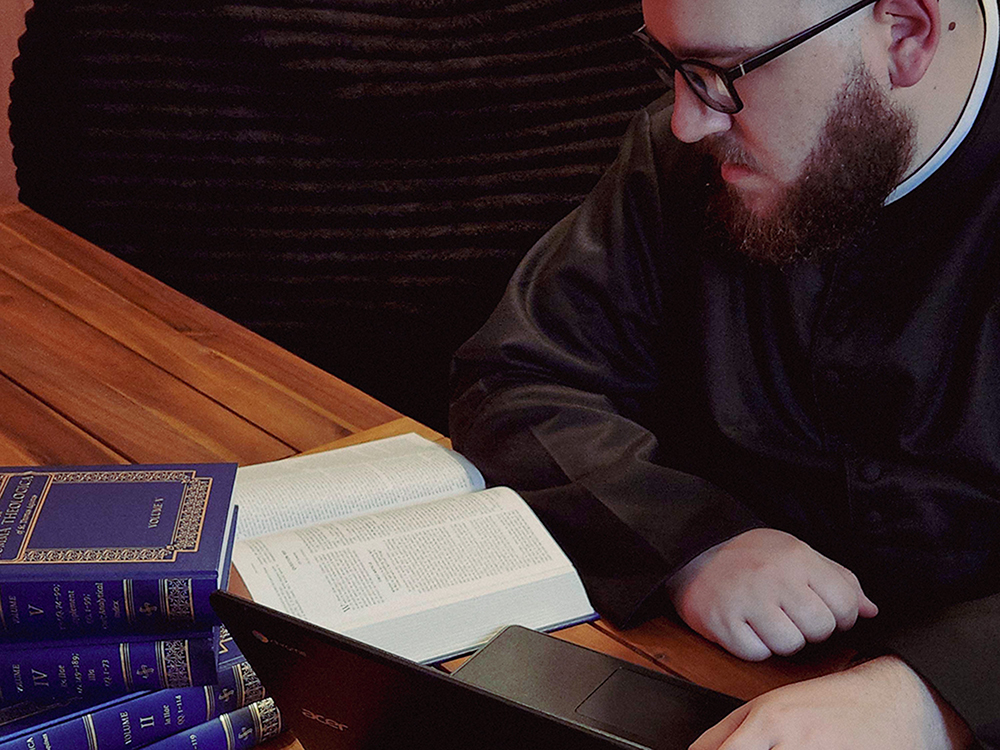
There’s a certain expectation people have when they hear that a clergyman works on a grimdark wargame. It usually involves raised eyebrows, a few cautious questions and, more often than not, a misunderstanding of both things at once.
My name is Brother Nicholas, or to my friends, “Jiro.” I am ordained to the minor orders within the Old Catholic Church, and alongside my vocation, I serve as a freelance writer, lore consultant and Latin translator for Trench Crusade.
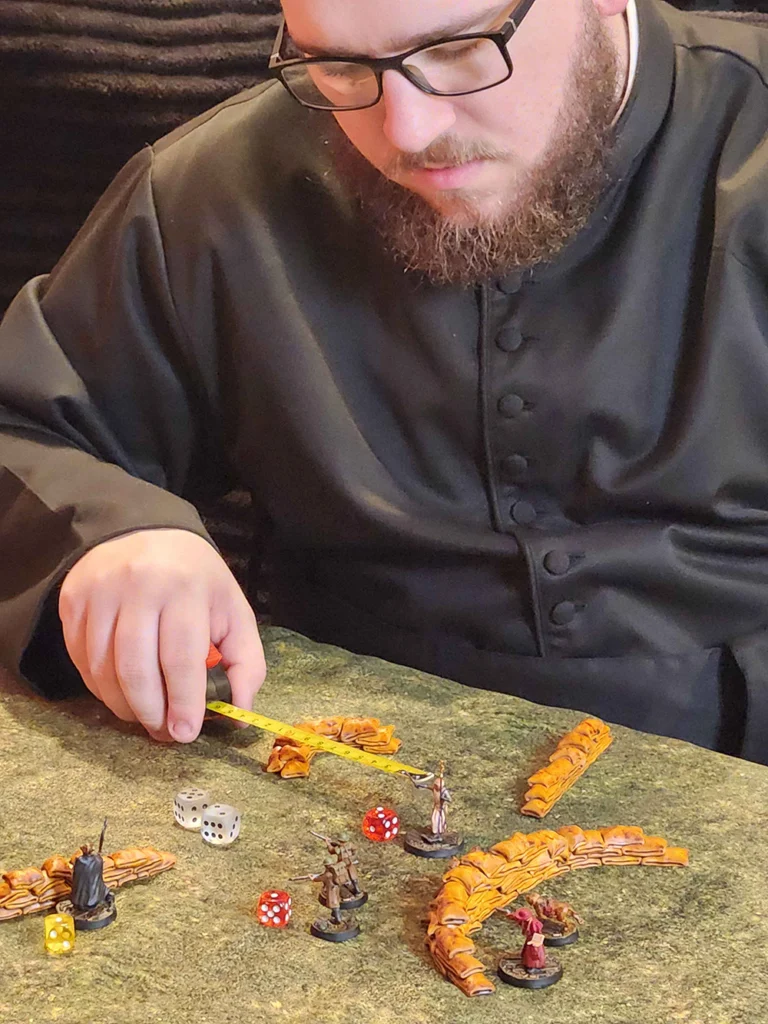
Like many in the hobby, I grew up on Warhammer, Mordheim and the broader tradition of grimdark settings. In many ways, that aesthetic – harsh, symbolic and heavy – has always been my baseline. So when the call went out on the official Trench Crusade Discord looking for Latin expertise, I stepped forward.
Because if we’re being honest, there is very little in grimdark fiction that is more “heavy metal” than Catholicism itself.
The space between fiction and truth
Working on Trench Crusade as a cleric isn’t about blurring the line between faith and fiction; it’s about understanding where they meet.
The setting is unmistakably fictional. It is exaggerated, sharpened and pushed into extremes for the sake of narrative and tone. And yet, like all good fiction, it carries something real within it. As Saint Thomas Aquinas wrote, “all truth is God’s truth”. Even within a grimdark world, there are reflections – distorted perhaps, but still present – of deeper theological realities.
For me, that’s where the work becomes meaningful.
In my day-to-day life, my vocation is rooted in hope – hope in grace, in redemption, in the ultimate triumph of good. What makes Trench Crusade compelling is that it does not discard that hope entirely. It is obfuscated, placed under unimaginable pressure, but never fully killed.
That tension is the key. It’s the difference between empty nihilism and something far more engaging: a world where faith still matters, precisely because everything around it is falling apart.
What a clergyman actually does for Trench Crusade
My role for Trench Crusade is fairly straightforward on paper: writing, consulting and translating, primarily into Latin. In practice, it becomes something a bit more layered.
I’ve contributed to pieces such as the Indulgence letter found within the main rulebook, along with additional writing and translation work across other materials. Beyond that, a significant portion of what I do involves rather esoteric research, digging into ecclesiology, Papal bulls, canon structures and the historical relationships between different branches of the Church.
That might sound niche, but in a setting like Trench Crusade, those details matter.
When you’re dealing with concepts like authority, schism, indulgences or autocephalous structures, consistency creates immersion. Even in an alternate timeline, there’s a need for internal logic, an understanding of how these institutions would evolve under pressure, fracture or reform in response to the horrors they face.
My goal is to help ensure that, even when the setting takes creative liberties, it still feels authentic – that when players encounter these elements, there’s a coherence beneath the surface.
And, if I’m being honest, I enjoy going deep into that level of detail. The team has been incredibly supportive of that, encouraging me to “get into the weeds”, explore esoteric concepts and embed subtle references to theological works throughout the writing. The result is that much of what I produce is layered with small details and Easter eggs for those inclined to look for them.
It’s also worth noting that Factory Fortress doesn’t bring in consultants like me simply for flavour but out of a genuine desire to treat the subject matter with a degree of care and respect. On the surface, Trench Crusade can appear extreme, almost deliberately provocative in its imagery and themes, but beneath that is a clear effort to ground the setting in historical context and a thoughtful handling of religious ideas. From my perspective, that intentionality makes all the difference. It allows the setting to explore intense and often uncomfortable themes without reducing them to parody, and it’s part of why I’ve been glad to contribute. There’s a clear understanding within the team that when you engage with material like this, especially drawing from real-world traditions, it should be done with purpose rather than just for shock value.
Getting faith right in a grimdark world
One of the things Trench Crusade does particularly well is its portrayal of evil.
The forces aligned against humanity are not vague or misunderstood; they are objectively malevolent. There’s a clarity to that depiction that echoes older traditions of storytelling, closer in spirit to the works of J. R. R. Tolkien than to more modern moral relativism. Evil is not simply a matter of perspective; it is something real, destructive and corrosive.
At the same time, the setting takes a distinctly grimdark turn in its portrayal of the forces opposing that evil.
They are not presented as purely virtuous by our modern standards. They are harsh, often brutal, and shaped by the same unrelenting world they inhabit. And yet, when placed in contrast with the excesses and horrors of their enemies, a kind of moral scale still emerges.
That balance is what makes the setting compelling.
It avoids both extremes, the oversimplification of “pure good versus pure evil” and the emptiness of “everything is equally corrupt.” Instead, it presents a world where morality exists but is tested constantly, strained under conditions that would break most people.
Why it matters
At the end of the day, players can tell when something is written with genuine passion.
For me, Trench Crusade is a creative outlet, something I deeply enjoy and take seriously as a craft. However, my vocation to Holy Mother Church is and always will be my primary calling. The two are not in competition. If anything, they inform one another.
The discipline, study and perspective that come from my clerical life shape how I approach the work. In turn, the work becomes an opportunity, whether directly or indirectly, to spark curiosity, to introduce ideas or to encourage others to explore theological concepts they might not have encountered otherwise.
Not through preaching, but through storytelling.
That in particular, I think, is where projects like this find their real value. Working on Trench Crusade as a clergyman isn’t about contradiction, it’s about context.
It’s about understanding that fiction can be a space for exploration, that even the darkest settings can carry reflections of truth, and that authenticity – whether theological, historical or emotional – adds weight to everything it touches.
If nothing else, I hope that comes through in the work.
Ad Majorem Dei Gloriam.
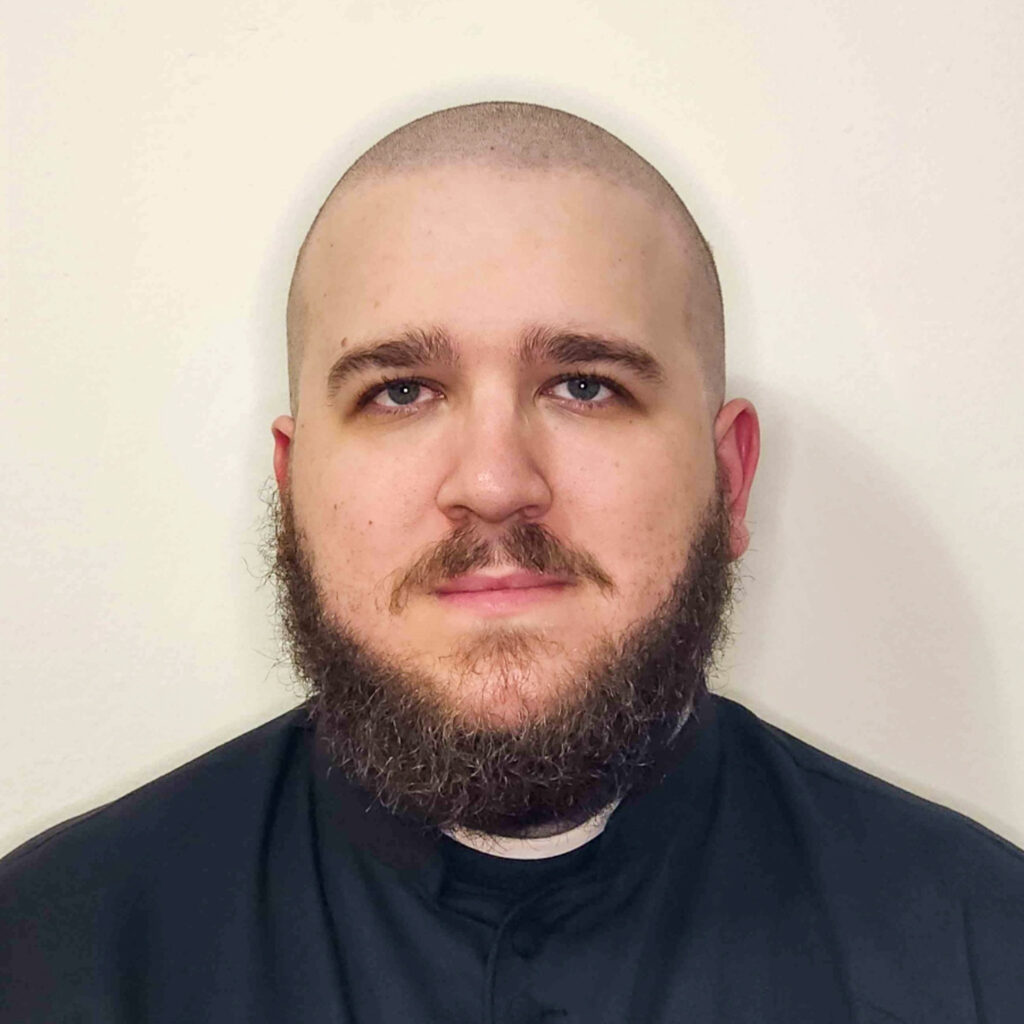
Nicholas Ceccarani
Brother Nicholas “Jiro” is a cleric ordained to the minor orders within the Old Catholic tradition. Alongside his vocation, he serves as a freelance writer, lore consultant and Latin translator for Trench Crusade. A lifelong tabletop wargamer raised on grimdark settings, he brings a focus on theological authenticity, ecclesiology and historical continuity to his work. His contributions aim to ground the setting’s more extreme elements in a sense of internal logic, depth and respect for the traditions that inspire it.